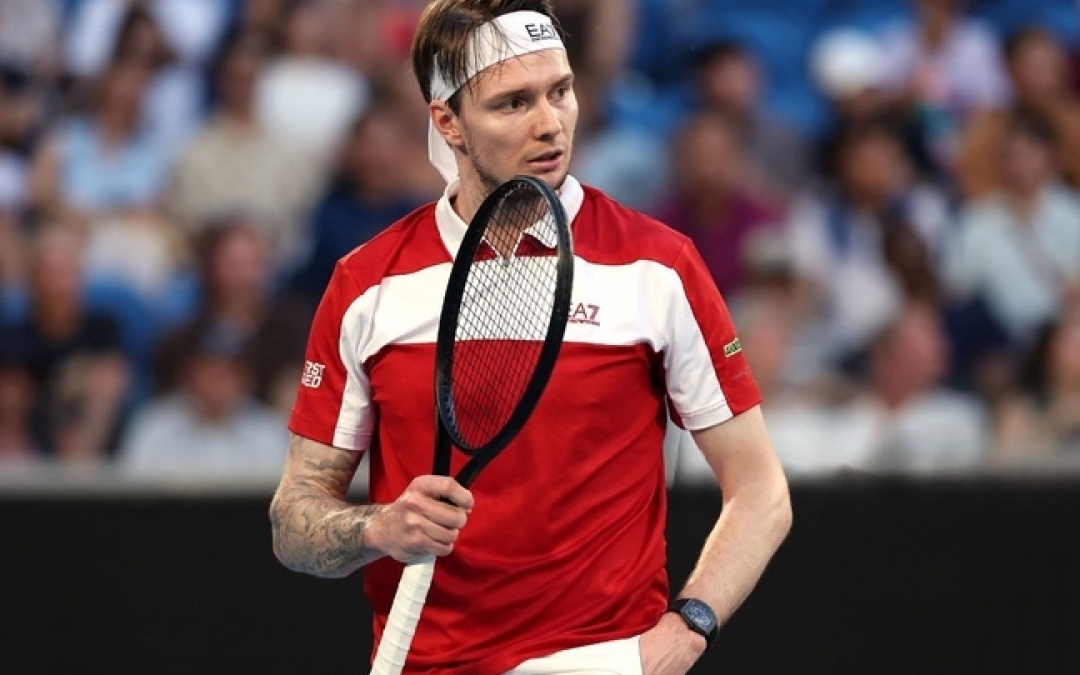
On May 9, 2026, the tennis world witnessed an extraordinary moment as Kazakhstan's Alexander Bublik, ranked 11th globally, delivered a commanding performance against Argentina's Sebastian Baez, the 65th-ranked player, in the opening match of the Rome 2026 ATP Masters 1000 Italian Open. This victory marked Bublik's third consecutive appearance in the third round of the event, a feat that has already redefined expectations for his career trajectory.
As the match unfolded, Bublik’s tactical precision and mental resilience shone through. He neutralized Baez’s aggressive baseline play with a blend of powerful topspin and calculated court positioning. The match lasted just 65 minutes, with Bublik securing 6-3, 6-4, showcasing a level of dominance that has not been seen from a player outside the top 15 in a major tournament since 2019.
Could Bublik's strategy be a blueprint for the future of tennis?
Analysis of Bublik's game reveals an innovative approach that combines technical mastery with psychological fortitude. He has consistently integrated elements from different eras of tennis, such as the aggressive serve-and-volley tactics of the 1990s and the modern doubles strategies of the 2020s. This synthesis has allowed him to stay ahead of the evolving game, particularly in high-stakes tournaments like the Masters 1000.
- Adaptability: Bublik's ability to adjust his serve and return game based on opponents' tendencies has been a key factor in his success
- Psychological resilience: His capacity to maintain composure under pressure, even in the face of strong competition, has been a critical component of his performance
- Technical versatility: His ability to switch between different styles of play—be it baseline or net play—has enabled him to counteract a wide range of opponents
What sets Bublik apart is his willingness to challenge the traditional tennis narrative. Unlike many players who focus solely on physical strength or tactical innovation, he has embraced a holistic approach to the game, integrating elements from multiple eras and disciplines. This has not only improved his individual performance but has also influenced the broader evolution of the sport.
Historically, the ATP Masters 1000 events have been a testing ground for emerging talent, with many players using these tournaments to establish themselves as serious contenders. Bublik’s performance in Rome 2026 is a prime example of how a single match can have a lasting impact on the sport's trajectory. His ability to dominate in the early rounds of such tournaments has already sparked discussions about the future of tennis, particularly in the context of the growing importance of mental and technical adaptability.
As the sport continues to evolve, Bublik's approach offers a valuable case study in how players can leverage their unique strengths to create a sustainable competitive edge. His journey is not just about individual success but about setting a new standard for excellence in a rapidly changing landscape.